

Network acceptance protocol and as-built documentation
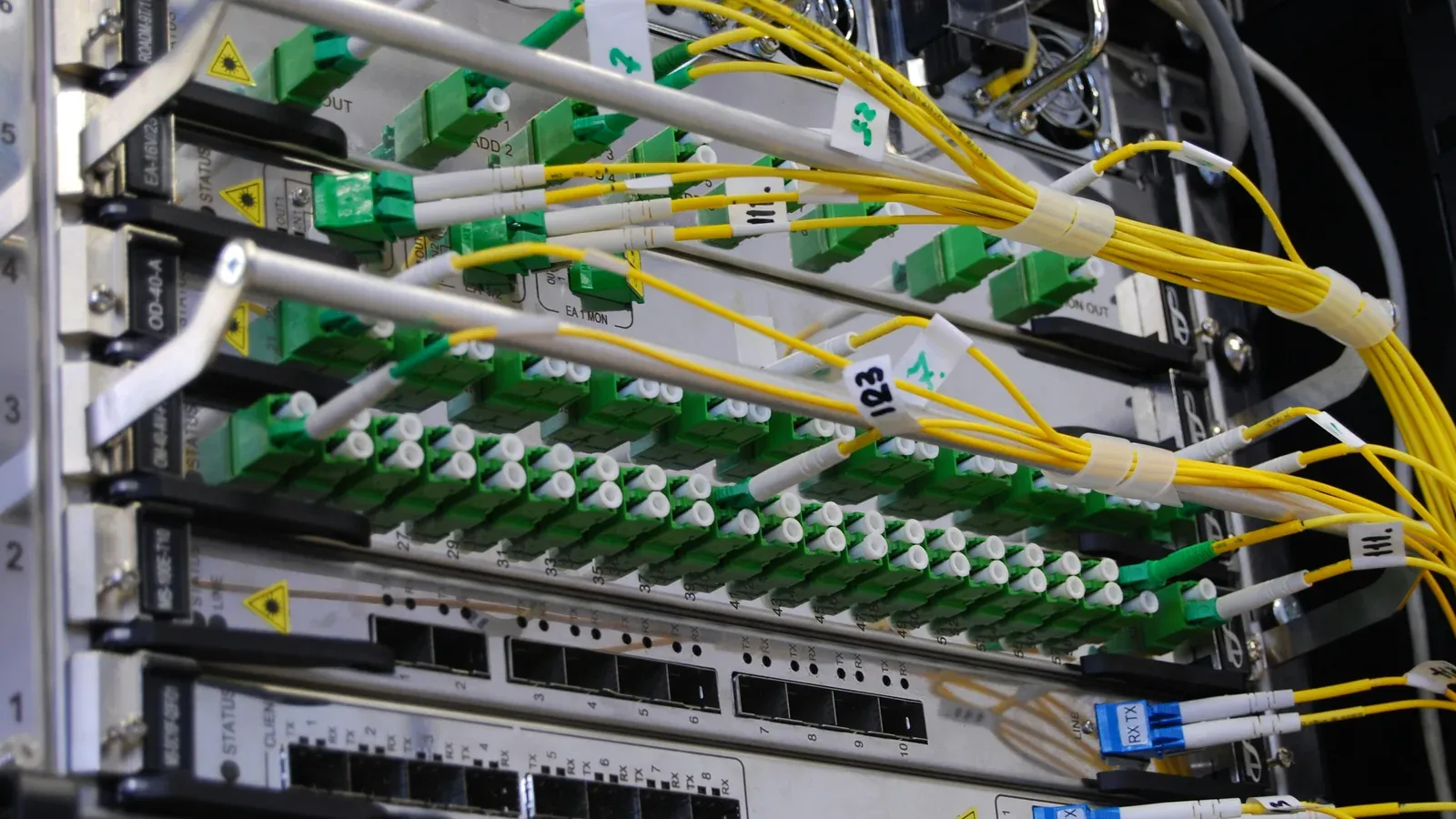
The network installation acceptance protocol is not a formality, but a document that states exactly what was done, tested and handed over. This article describes what it should contain, what is the difference between a continuity test and a certification measurement, and what must remain in the company after the work is completed so that the network is not dependent on the contractor.
Why do you need a network installation acceptance protocol at all?
The acceptance protocol protects both parties, although only the interest of the ordering party is usually mentioned.
The contractor is protected against the later "it didn't work from the beginning" in matters that were working and checked upon acceptance, while the ordering party is protected against the statement "it was not within the scope" if the work in question was previously agreed.
The third function is the most important, but most often overlooked: The protocol provides proof that the installation has actually been checked, while receiving on an "internet is there, working" basis leaves no reference point to return to when problems later arise.
It is worth saying it directly: if the contractor does not propose the protocol, he does not save time, but leaves the company without a document that will be missing exactly when it is needed.
Executed scope and contractual scope
The first part of the protocol answers the question whether everything that was previously agreed was carried out.
It should contain three things:
- scope from contract or offer, bulleted, not described in one sentence,
- scope actually made, with differences noted,
- additional works, if any, with information about who ordered them and when.
The last point is the source of most disputes, because during the work there is often an additional socket, an unforeseen drilling or the replacement of a section damaged by another team. If the change is not recorded in the report at the time of implementation, it may appear on the invoice as a surprise.
The principle also works the other way around, so if something was not done, the report should indicate the reason and further arrangements.
List of points and devices with the result
The list of points and devices constitutes the substantive heart of the entire document.
For cabling, provide each track with its designation, socket location, termination point at the distribution point, and test result. The marking must appear physically on the socket and panel, not only in the table, because a track that cannot be identified on site is not described in practice.
For active devices, you must save the model, serial number, installation location, network address and assignment to the appropriate segment.
Without this list, any subsequent change begins with figuring out what goes where, creating a cost that is incurred later and repeatedly.
Continuity test and certification measurement
This distinction is worth knowing before signing the contract, because it can be a source of costly misunderstandings during acceptance.
Continuity test checks that the track is connected correctly, the pairs are in the correct order and there is no open or short, answering the question "will it work" while remaining fast and cheap.
Certification measurement is performed with a certification-class meter to check the transmission parameters of the track in relation to the requirements of a given cabling category and to answer the question whether the installation will work with the declared efficiency along its entire length. The result is a report that includes the measurements of each track.
The difference is practical because a track can pass a continuity test and yet fail to meet the parameters of its category, thus negotiating a lower speed or generating errors under load. This is one of the common causes of the symptom described in the article about what to do when your corporate network is slow.
Certification measurement is not always necessary, but it is justified when the installation is to be covered by the cabling manufacturer's system warranty, the facility is large, higher throughput are planned or the investor wants to receive proof of the quality of workmanship.
Determine this before the contract, not upon delivery, because certification measurement performed after the fact on a finished installation in which something needs to be improved costs much more than planned from the beginning.
Access is transferred separately
It is worth strictly following the rule according to which passwords and access data are not included in the content of the acceptance protocol.
The reason is simple, because the protocol circulates between accounting, archives, and sometimes also contractors from other industries, it is scanned and sent by mail, so the passwords contained in it spread without control.
The correct solution is that the protocol notes the fact transfers access, lists their scope and indicates the recipient, while the data itself goes through a separate, secure channel.
What should be communicated:
- administrative accounts for network devices, with full permissions,
- property accounts in the management panel, not guest access on the contractor's account,
- access data for wireless network configuration,
- information about all accounts that remain active and why,
- confirmation that the default passwords have been changed.
The second point determines whether the network belongs to the company or the contractor, which is described in more detail in the article about changing the IT company and taking over the administration.
What should remain with the company after receipt
As-built documentation is a set that allows another person to understand the installation without having to talk to the original contractor:
| Element | What is it for? |
|---|---|
| Topology diagram | what is connected to what and where |
| Plan with the location of points and routes | where to look physically |
| List of points with markings | track identification without dismantling the wall |
| Test or measurement report | quality proof and failure reference |
| List of devices with serial numbers | service, warranty, inventory |
| Network and segment configuration description | understanding why something works the way it does |
| Warranty cards and conditions | it is known who is responsible for what and for how long |
| Access transfer confirmation | it is known that the company has full rights |
Documentation should be submitted in an editable or at least updateable form, because the printout scan quickly ceases to correspond to reality and may be misleading after a year.
Before you sign
The short list below allows you to check the most important elements on site:
- Have markings on the sockets and panel physically match with a list in the documentation? Check a few at random.
- Does each track have a test score, not just a collective "tested"?
- Is the additional work described and does it match what you remember?
- Whether administrative access works from your account, and not just from the artist account?
- Have any artist accounts been activated and do you know why?
- Do you know what the warranty covers and for how long, separately for hardware and labour?
- Is there a contact and procedure for reporting faults during the warranty period?
- Is there anything left to finish and does it have a deadline?
Point 4 is worth checking in front of the performer, not after they leave, because if the account isn't working, that's the right time to fix it.
What not to expect
In order not to build false expectations, you also need to define the boundaries of this document:
- the acceptance report is not design documentation or a construction project,
- does not replace the inspections required by law for installations in other industries, in particular electrical and fire protection. If the scope of work touches on these areas, it requires people with appropriate authorizations, and this article does not replace that,
- does not guarantee that the network will work forever. It guarantees that on the day of receipt it operated in a verified and documented manner.
Reception is not the end
The documentation from the day of receipt is fully up-to-date on that day, because later devices are added, the layout of rooms changes, someone reconnects the cable or adds a wireless network for a new department.
An installation whose documentation is not updated after two years may be more misleading than if it had not existed, which is a real problem when taking over environments.
We can implement the implementation by providing a set of documentation with full administrative rights, or cover the environment with constant care, in which maintaining an up-to-date description is part of the contract, in addition to monitoring, updating and handling notifications.
If you're just choosing a contractor, it's worth going through questions to the network contractor before the contract, while our scope includes building and maintaining corporate networks.
Book a free IT review. If you have an installation without documentation, this is where we start.