

The network is part of the production process.
Terminals, label printers, the ERP system and shop-floor equipment aren't separate topics. Together they decide whether an order moves through the process without downtime.
- zone separation
- VLAN
- designed after measurement
- Wi-Fi
- process stops, no workaround
- P1
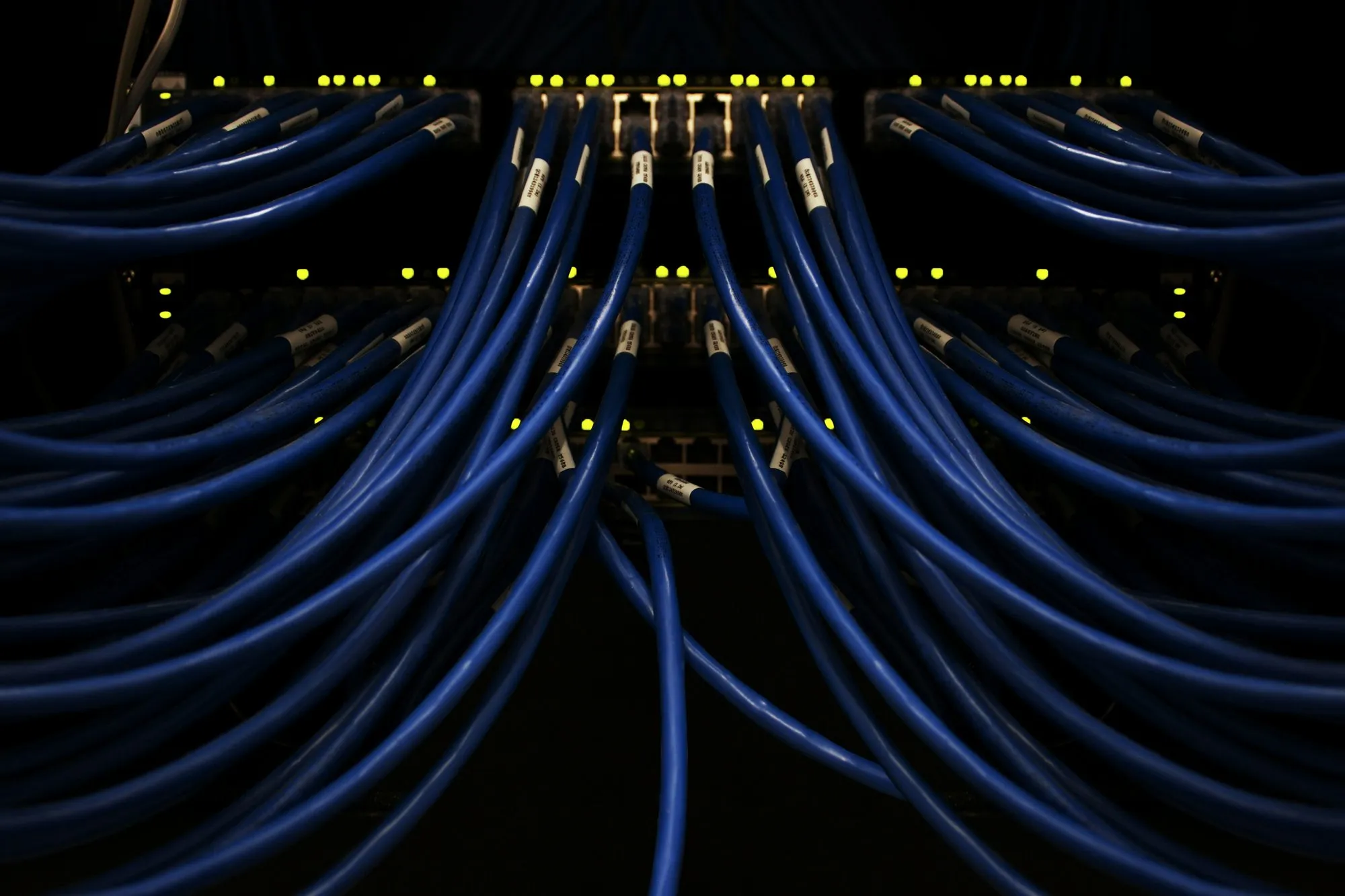
Critical systems and workarounds come first.
We map the dependencies between the network, servers, terminals, ERP and internet access. For each critical element we establish the impact of a failure and a realistic workaround.
Designed for a working facility, not an empty floor plan.
Racking, machinery, stock and moving equipment change radio conditions. We survey Wi-Fi in conditions close to normal operation and split upgrades into stages.
- separate office, production and guest networks
- backup power for critical devices
- documentation of ports, racks and IP addressing
- maintenance window agreed with operations
After handover, day-to-day operation begins.
Monitoring, configuration backups, updates and documentation of changes are part of maintenance. Without them, even a properly implemented network becomes difficult to diagnose over time.
Each port and cable should lead to a known place.
Before expansion we check cable routes, cabinets, power supply, switches, markings and port reserve. The project takes into account the devices used today and the real development of stations, machines, terminals and cameras. After completion of the installation, we describe the ports and transmit the performance documentation and the results of the agreed measurements.
We logically separate office, production, guest, server and IoT components. Access rules arise from the process: the terminal is to connect to the right service, but it does not need to see the entire network. Segmentation is tested before reception, including the operation of printers, scanners and applications needed in the hall.
Emergency power supply, spare connection and backup device are selected on the basis of the impact of the failure. Not every port requires redundancy. First, we indicate the elements that the lack of which stops the process, and we determine what bypass is acceptable to the operation.
The terminal's range is measured where it really works.
The Wi-Fi project is not based solely on the area of the facility. The racks, materials, machines, gates and traffic of trolleys affect signal propagation. We determine the types of equipment, the required bands, critical areas and the way users move, and then perform measurements in conditions as close as possible to daily work.
After installation, we check coverage, connection quality and roaming on real terminals. The documentation shall include the deployment of access points, network configuration and places requiring special attention. If the construction of the building does not allow to achieve the goal without additional infrastructure, we show it before expanding the scope.
The network for guests, employees and operating equipment receives separate rules. We translate the technical parameters into a utility test: the terminal is to maintain the session on a fixed route, and the label printer and storage application are to operate in places identified as critical.
A copy of the critical system must take account of the way it is reproduced.
For the server, ERP database and production files, we determine the dependencies, the order of launch and the required range of copies. We monitor backup tasks, but periodically you need a playback test. The result is recorded so that the company knows what data was recovered and what actions were needed.
Changes in ERP, production equipment and integrations are coordinated with manufacturers of these systems. NexaIT is responsible for the agreed layer of infrastructure, access, networks and servers; the owner of the process approves business rules. Such a breakdown limits situations in which several suppliers are waiting for each other during the crash.
The required time of reproduction and the permitted loss of data are business decisions. We help translate them into architecture and cost, but we do not automatically assume the highest level of protection for each system. Priorities are given to processes that cause the biggest loss to be stopped.
Modernisation has a withdrawal plan, not just an implementation plan.
We divide the work into stages and agree service windows with the person responsible for the operation. Before the change, we record the starting state, configuration, success criterion and return conditions. Critical devices and connections are tested before moving on to the next stage.
Not all upgrades require a stop throughout the hall. Some of the equipment can be prepared in parallel, switched in zones or run a temporary bypass. If a safe change requires the process to be stopped, we communicate it before valuation instead of hiding the risk in the overall schedule.
After implementation, we save the final configuration and indicate elements requiring observation. The reception shall include scenarios agreed before take-off, and not just to verify that the devices have been activated. The person responsible for the operation shall confirm the operation.
Monitoring shortens the diagnosis but does not replace the procedure.
We monitor agreed servers, network devices and stations, respond to alerts and plan updates. Employees use one queue of applications and priority is due to the impact of the problem on production or storage. Stopping a process without circumvention shall be treated differently than a fault of a single post.
The cost of managed IT depends on the number of devices, location, shift work, critical systems, hours of support and required SLA. Equipment, licences, wiring and larger projects shall be shown separately unless otherwise provided for in the contract. Before the offer, we also determine when remote assistance is sufficient and when presence on the spot is needed.
The maintenance report shows the actions carried out, repeated problems and decisions waiting on the client side. Allerts without business significance are fine-tuned, and critical events receive a simple escalation path. Thanks to this, monitoring helps to diagnose, instead of just generating more messages.
- Helpdesk and P1-P4 priorities
- monitoring and updates
- control of copies and documentation
- planned infrastructure visits
- coordination of system manufacturers
What does an hour cost when production stops?
Run the numbers for your own business. Then let's talk about what it costs to make sure those hours don't happen.
Warehouse, yard and office in one network.
All case studies
Free · 60 minutes online · no obligation
An IT review, not a sales call.
- You talk to an engineerOnline, by video call. Not with a salesperson. We don't install or change anything.
- We check 8 areasBackups, access, network, email, server, licences, protection and KSeF readiness.
- You get a scorecardThree priorities on one page, emailed after the meeting. Yours to use however you like.
We don't use a contact form. We answer the phone and reply to emails.