

Network that can be diagnosed from the panel, and not blindly
We design, build and maintain corporate networks. With documented addressing, separated zones and management from one place, also for off-site locations.
When it's worth tackling
If you recognise two or three of these signs, a free IT review will show you where to start.
- Wi-Fi works well in part of the office, but "somewhat" in the rest.
- Everyone is on one network: guests, employees, cameras, printers and server.
- Everyone who has ever been here knows the password to the company network.
- There is no network diagram or description of which cable goes where.
- In the event of a failure, the first step is to pull out the cables one by one.
- Remote work works on a solution that someone once configured and no one understands it.
- The company is growing and there are no power sockets in the new room.
This is the difference, you pay for.
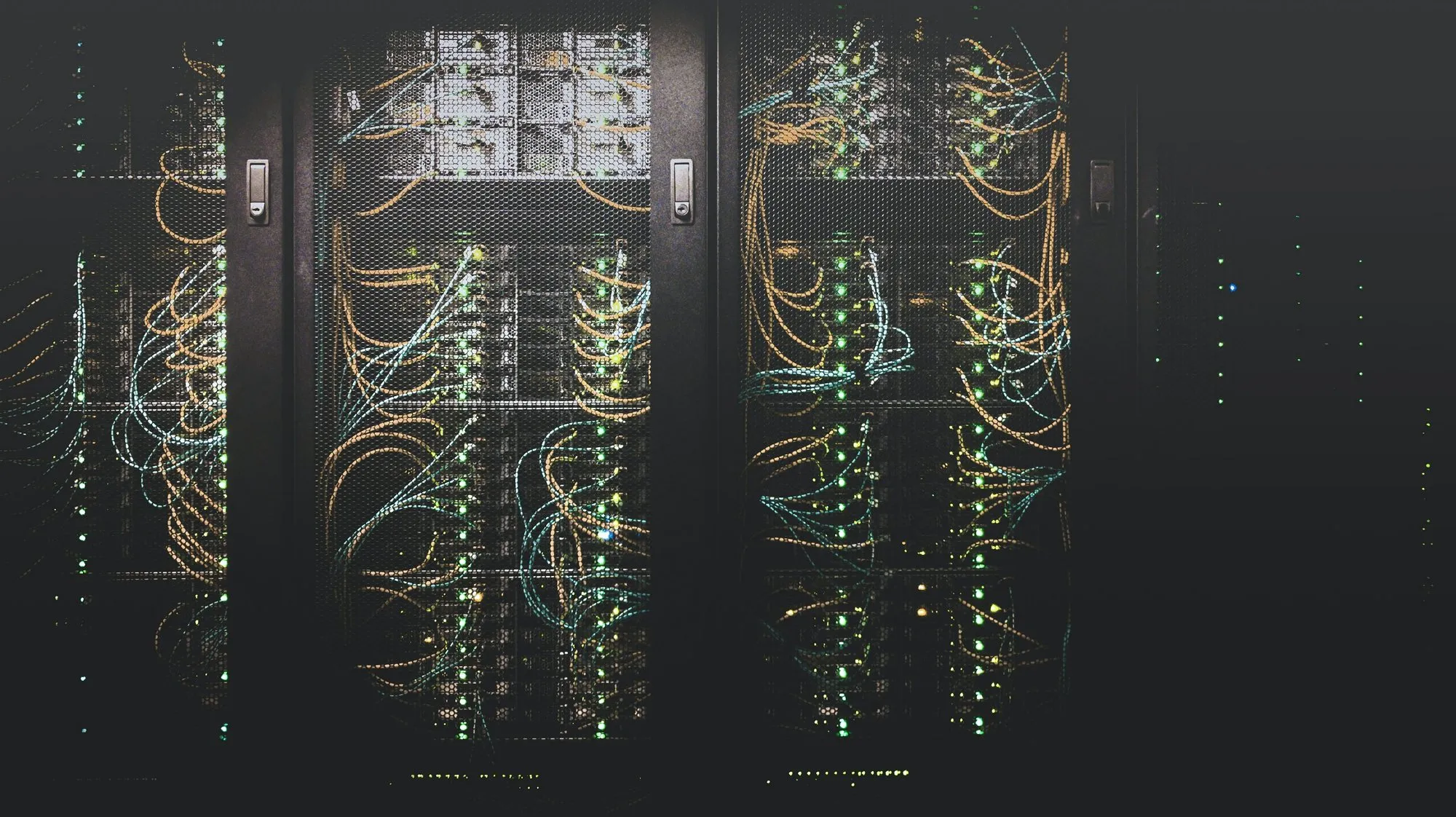
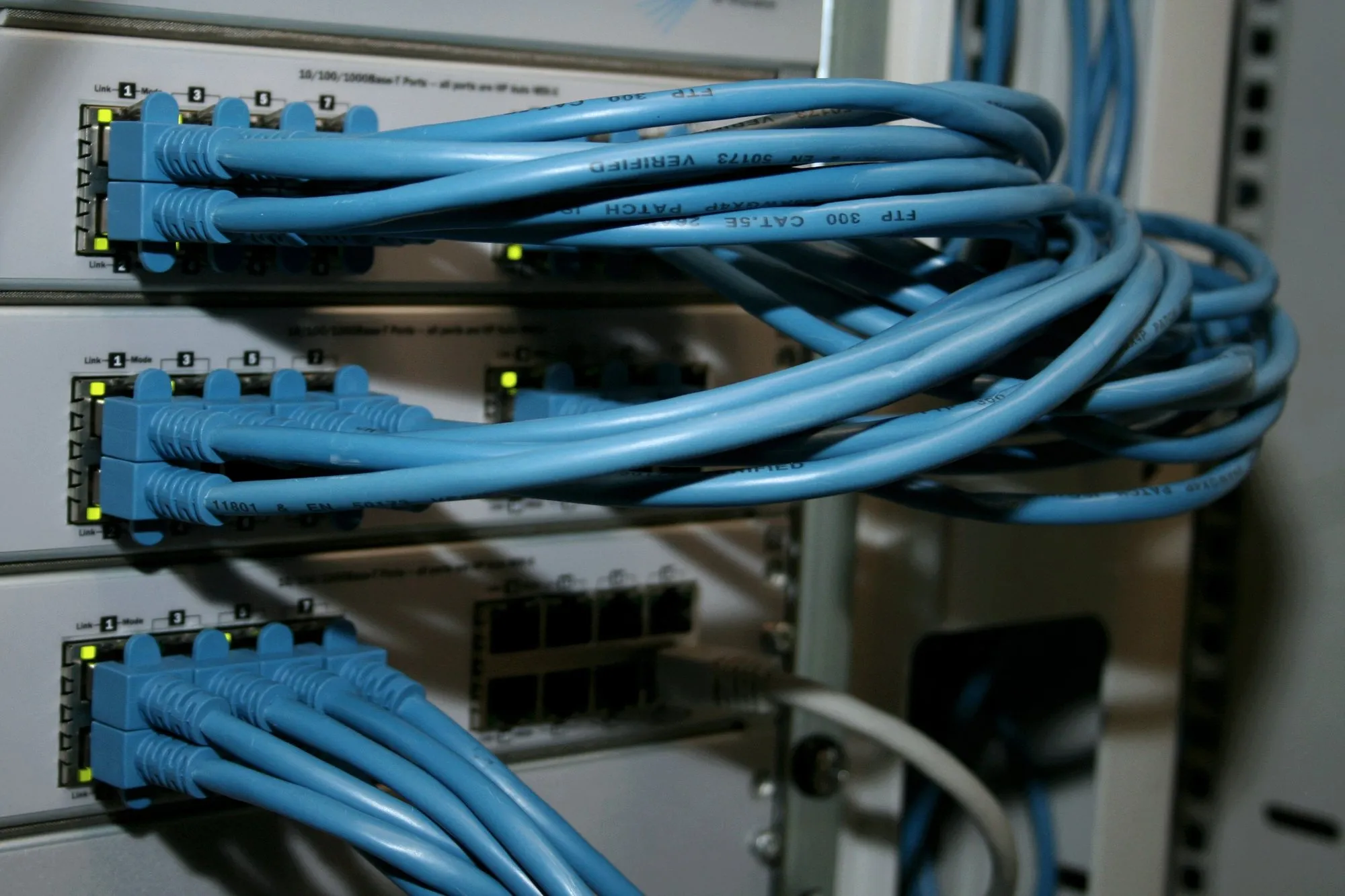
On the left, a network where no one knows what goes where. On the right, the cables are described, arranged and entered into the documentation. Drag the slider.
 BeforeAfter
Reference photos. They do not represent the implementation of NexaIT.
What we do as part of this service.
- 1
Network review and design
Device inventory, range measurement Wi-Fi, zone and addressing determination. The project is created before the purchase of equipment, not after it.
- 2
Structured cabling
Cable trays, sockets, patch panel and cabinet. With a description of each port so that the diagnosis does not require guesswork. Installation of a network point in the region from PLN 242 net, materials separately.
- 3
Wi-Fi matched to the rooms
Location of access points, selection of channels and power, separate network for guests. The goal is uniform operation throughout the office, not the maximum number of devices.
- 4
Segmentation and access control
Separation of zones for guests, employees, production equipment, monitoring and servers, with rules defining what can talk to what.
- 5
Remote access for employees
Secure access tunnel with two-factor authentication and named accounts, so that after an employee leaves, it is enough to disable one account.
- 6
IP video surveillance
IP cameras powered by the network, recording on a local recorder and a separate network zone for cameras. We determine the arrangement depending on what is to be visible, and the duration of storage of the recordings with you, because it is subject to data protection regulations.
- 7
Management from one panel
Platform for managing the wireless network, switches and security layer from one place, also for multiple locations.
- 8
Monitoring and maintenance
Alerts about device unavailability, hardware software updates and cyclical configuration review as part of subscription care.
- 9
Network documentation
Scheme, addressing table, description of zones and ports, and access data provided in the protocol. A document that allows another engineer to take over the network without reinventing it.
What you get in writing.
Network design
Logical and physical diagram, addressing table, division into zones with justification and list of selected equipment with the role of each device.
As-built documentation
Description of patch panel ports, location of access points and photos of the cabinet after completion of work.
Range measurement report
Map of Wi-Fi coverage after implementation, with weaker signal areas marked and what applies to them.
Access transfer protocol
Access data to the management panel and devices, provided in writing, along with the rules for their storage.
Who is responsible for what.
Internet connection failure is on the side of the connection provider. We can diagnose it and report it, but we have no influence on the time of its removal and we do not assume any obligation to do so.
On the NexaIT side
- network design, device selection and configuration according to the project
- execution or supervision of structured cabling
- configuration of zones, access rules and wireless network
- configuration and maintenance of remote access for employees
- monitoring of network devices and updating their software
- maintaining network documentation and addressing table
- diagnosis and troubleshooting within the scope covered
On your side
- ensuring access to the premises and consent of the building owner for installation works
- budget for hardware, management platform licences and installation material
- contract with an Internet connection provider and reporting connection failures to this provider
- indication of which devices and systems must be able to see each other, because this results from the company's processes
- decision on access rules for guests and subcontractors
- informing about personnel changes so that remote access accounts can be disabled
- ensuring power supply and conditions at the cabinet installation site
What this service doesn't include.
Clear scope boundaries are part of a good contract. We talk about them before you sign, not when the first invoice arrives.
We coordinate construction work and certification measurements with a subcontractor if you need it. We do not include them in the price of the service because their scope depends on the building, not the network.
- network devices, management platform licences and installation material, which we invoice separately
- construction works: openings in load-bearing walls, trunking on the facade, making good the plasterwork after installation
- Internet connection and responsibility for its availability and parameters
- cabling certification measurements performed by an authorized entity with the issuance of a protocol
- maintaining devices to which we do not have administrative access
- access control and alarm systems, which are a separate specialization
- legal assessment of video surveillance, which is the responsibility of the data controller and his advisor
- removing the effects of overvoltage and mechanical damage to the cabling
When it's a good fit, and when it isn't
It makes sense if
- The network supports more than a few computers and something really depends on it.
- You want to separate guests, employees and production equipment.
- The company has several locations and managing each one separately is no longer feasible.
- You need documentation because the current network is also a mystery to you.
We don't recommend it if
- One router is enough for five people in one room. Then the network project is an unpaid expense.
- The equipment is to be the cheapest possible. Management and monitoring cannot be maintained under this assumption.
- The building does not allow for any installation work, and Wi-Fi is intended to cover the production area.
- You expect a commitment for the availability of an Internet connection. This always remains on the operator's side.
What affects the price
- number of network points to be constructed and the difficulty of cable routes in the building
- surface and wall structure, because the number of access points depends on them
- number of zones and access rules that need to be designed and maintained
- number of locations and whether they are to be connected by a tunnel
- choice of management platform and licensing model for its functions
- whether emergency power supply is needed for network devices
- are we working in a working environment, because migration without downtime is more expensive than building from scratch
Questions before you decide.
Zyxel or Ubiquiti UniFi?
Depends on what you already have and what you need. We have a partnership with Zyxel Networks, so we have access to the manufacturer's support channel and technical materials. We implement UniFi from scratch and take over existing installations, without partner status. We do not replace functional infrastructure just because it is of a different brand.
How many access points does an office need within 200 metres?
This cannot be given responsibly without seeing the layout of the rooms. Two points in an open space may be enough, but with reinforced concrete and plasterboard walls with filling, the same area may need four. That's why we start with measurement, not with the conversion to metres.
Is it necessary to shut down the company for the duration of the work?
Usually no. The cabling can be run while the office is in operation, and we plan to switch to the new configuration during the service window, usually in the evening or on the weekend. Work outside hours has an additional fee according to the price list and we talk about it in the quote, not after the fact.
What about the network in the production hall or warehouse?
This is a different problem than an office: longer distances, metal obstacles, cart traffic and mobile devices passing between access points. It requires on-site measurement and equipment adapted to such conditions. We design the network so that terminals and label printers operate throughout the entire hall, not just at the office.
From our projects, without client names.
All case studies
Related
Free · 60 minutes online · no obligation
An IT review, not a sales call.
- You talk to an engineerOnline, by video call. Not with a salesperson. We don't install or change anything.
- We check 8 areasBackups, access, network, email, server, licences, protection and KSeF readiness.
- You get a scorecardThree priorities on one page, emailed after the meeting. Yours to use however you like.
We don't use a contact form. We answer the phone and reply to emails.